Short and reduced-diameter dental implants
Short and reduced-diameter dental implants where there is a marked bone deficit.
Short implants can spare patients bone grafting
Where the bone deficit was pronounced, new bone volume previously had to be built up in a further surgical procedure followed by a healing period of several weeks, in order to create a promising implant site. Long-term stability can now be achieved without that grafting, using shorter, specially shaped implants. The roots of the neighbouring teeth, the mandibular nerve and sensitive anatomical structures such as the lower branch of the trigeminal nerve are spared, since placing shorter implants requires drilling less deeply into the bone. A small hole can be enough to place the implant, without exposing the surrounding area.
These smaller implants are intended to spare vital structures and can in individual cases be placed less invasively. Placing them is simpler and gentler than conventional implant treatment and can shorten the overall course of treatment. Whether mini implants are an option for a patient, and when they can be loaded, is decided by the treating dentist after the appropriate diagnosis.
The new, shorter implants and implants of smaller diameter often make it possible to place implants without bone grafting and with good prospects of success. The success rate for these smaller implants is as high as for the classic lengths and diameters used until now.
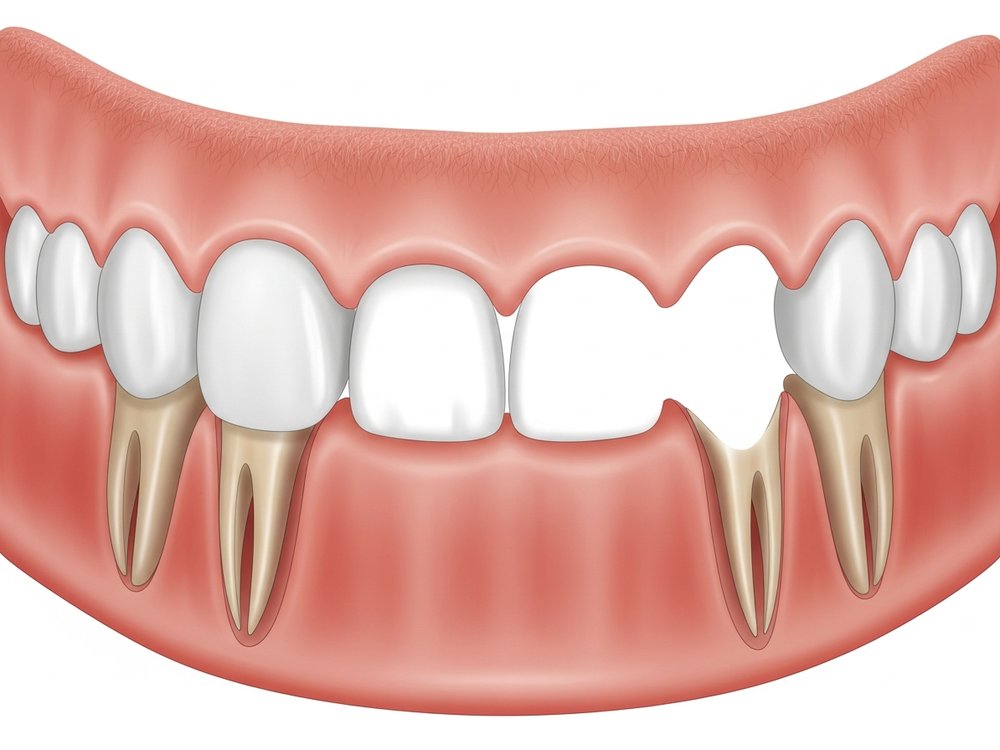
Little bone
When the bone is narrow
Bone loss after a longer period without teeth sets anatomical limits. The use of classic implant lengths and diameters is limited in the lower jaw by the mandibular nerve and in the upper jaw by the maxillary sinus.
Older people often have a thin jawbone. For conventional implant treatment, bone frequently has to be rebuilt in these patients because the jaws have resorbed too far. With the new, shorter and reduced-diameter yet still stable implants, a fixed restoration can be offered even where there is little bone. These implants widen the range of treatment for older patients in particular. Despite their smaller diameter they can give a denture a secure hold where the bone height is sufficient.
The key points at a glance
- In the lower jaw the mandibular nerve, and in the upper jaw the maxillary sinus, limits the possible implant length.
- Older people often have a thin jawbone that is not sufficient for classic implants.
- With shorter, specially shaped implants, long-term stability can be achieved without bone grafting.
- That spares patients an additional procedure and the healing period of several weeks that follows it.
Answered briefly